27 December 2021

Edward O. Wilson, prominent biologist and author, has died at 92

E. O. Wilson in 2003. Photo credit: Jim Harrison / PLOS

Abstract: "Edward O. Wilson, a prominent biologist and prolific author who help raise global awareness and understanding about biodiversity and conservation, has died. Wilson began his career studying the biology and social structures of ants which led him to develop expansive theories on evolution and humanity’s relationship with the planet. While Wilson’s research was highly influential in scientific circles and won numerous recognitions, he was mostly widely known for his accessible writing, including articles and best-selling books which introduced concepts like biodiversity to the masses. Wilson was an outspoken advocate for global conservation efforts."

Read more:  https://news.mongabay.com/2021/12/edward-o-wilson-prominent-biologist-and-author-has-died-at-92/

17 December 2021

‘Cooling the climate for 10,000 years’: How saving wetlands can help save the world

A cloudberry ripe for the picking in a Scandinavian bog. Image in the public domain.


ABSTRACT: "From the vast frozen mires of the arctic to the peat swamps of Asia: “all wetlands are under threat,” said Jane Madgwick, CEO of Wetlands International. “We’re losing them three times as fast as forests." Peat swamps, or peatlands, are particularly effective at storing carbon, which has accumulated over centuries and even millennia as dead plant matter became trapped in waterlogged soil. But if drained or otherwise damaged, peat quickly turns from carbon sink to carbon source. As nations race to protect and replant forests in an effort to curtail global warming, wetlands experts such as Madgwick are urging leaders to place similar importance on wetland conservation and restoration.


READ MORE: https://news.mongabay.com/2021/12/cooling-the-climate-for-10000-years-how-saving-wetlands-can-help-save-the-world/


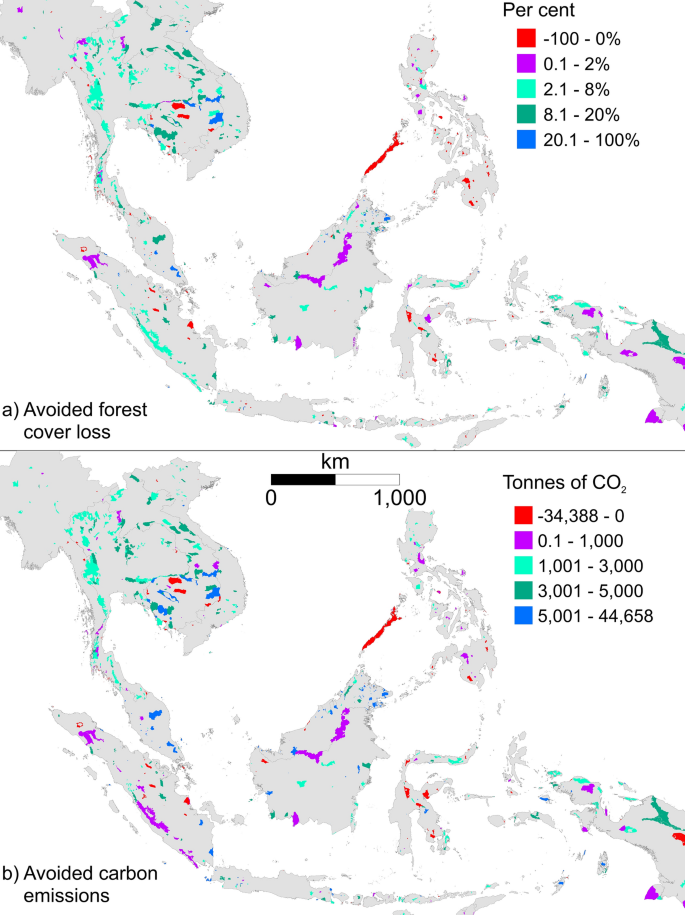
Southeast Asian protected areas are effective in conserving forest cover and forest carbon stocks compared to unprotected areas

figure1


ABSTRACT: "Protected areas aim to conserve nature, ecosystem services, and cultural values; however, they have variable success in doing so under high development pressure. Southeast Asian protected areas faced the highest level of human pressure at the turn of the twenty-first century. To estimate their effectiveness in conserving forest cover and forest carbon stocks for 2000–2018, we used statistical matching methods to control for the non-random location of protected areas, to compare protection against a matched counterfactual. We found Southeast Asian protected areas had three times less forest cover loss than similar landscapes without protection. Protected areas that had completed management reporting using the Management Effectiveness Tracking Tool (METT) conserved significantly more forest cover and forest carbon stocks than those that had not. Management scores were positively associated with the level of carbon emissions avoided, but not the level of forest cover loss avoided. Our study is the first to find that METT scores could predict the level of carbon emissions avoided in protected areas. Given that only 11% of protected areas in Southeast Asia had completed METT surveys, our results illustrate the need to scale-up protected area management effectiveness reporting programs to improve their effectiveness for conserving forests, and for storing and sequestering carbon."

READ MORE: https://www.nature.com/articles/s41598-021-03188-w

28 September 2021

The first complete map of the world’s shallow tropical coral reefs is here

Branching coral

Abstract: "Scientists have completed the first-ever global, high-resolution map of the world’s shallow tropical coral reefs. When combined with an integrated tool that tracks global coral bleaching events in near-real-time, the new resource provides a comprehensive overview of the trends and changes in global coral reef health. While the completion of the map is an achievement in itself, the scientists behind the Allen Coral Atlas say they hope the new resource will spur action to improve coral reef protection. The new mapping platform is already being used to support conservation projects in more than 30 countries, including designation of marine protected areas and to inform marine spatial plans."

Read More: https://news.mongabay.com/2021/09/the-first-complete-map-of-the-worlds-shallow-tropical-coral-reefs-is-here/


21 September 2021

Sea turtles: Can these great marine migrators navigate rising human threats?

Abstract: "Humanity is quickly crossing critical planetary boundaries that threaten sea turtle populations, their ecosystems and, ultimately, the “safe operating space” for human existence. Sea turtles have survived millions of years, but marathon migrations put them at increasing risk for the additive impacts of adverse anthropogenic activity on land and at sea, including impacts from biodiversity loss, climate change, ocean acidification, land-use change, pollution (especially plastics), and more. The synergistic effects of anthropogenic threats and the return on conservation interventions are largely unknown. But analysts understand that their efforts will need to focus on both nesting beaches and ocean migration routes, while acting on a host of adverse impacts across many of the nine known planetary boundaries. Avoiding extinction will require adaptation by turtles and people, and the evolution of new, innovative conservation practices. Key strategies: boosting populations to weather growing threats, rethinking how humanity fishes, studying turtle life cycles (especially at sea), safeguarding habitat, and deeply engaging local communities."

Read more: https://news.mongabay.com/2021/09/sea-turtles-can-these-great-marine-migrators-navigate-rising-human-threats/

Pollination advantage of rare plants unveiled

Figure 1

Abstract: "Species diversification results from the balance between the formation of new species (speciation) and the loss of existing ones (extinction). The tremendous proliferation of different life forms on Earth can be attributed to both high rates of speciation and low rates of extinction. Flowering plants — a group called angiosperms — are one of the most diverse groups of non-mobile organism. There are approximately 352,000 plant species, nearly 90% of which depend, to various extents, on insects and other animals for pollination and seed production1. These animal pollinators have been key to the unstoppable diversification of the angiosperms, starting at least 120 million years ago, with pollinators promoting speciation by acting as potent selection agents for a plethora of flower traits2,3. Pollinators also aid species persistence by enabling pollen transfer between relatively distant individuals in sparse plant populations4. Writing in Nature, Wei et al.5 report that, for plant species that flower at the same time, pollinators mediate interactions that might facilitate species coexistence in diverse plant communities."

Read more: https://www.nature.com/articles/d41586-021-02375-z

11 September 2021

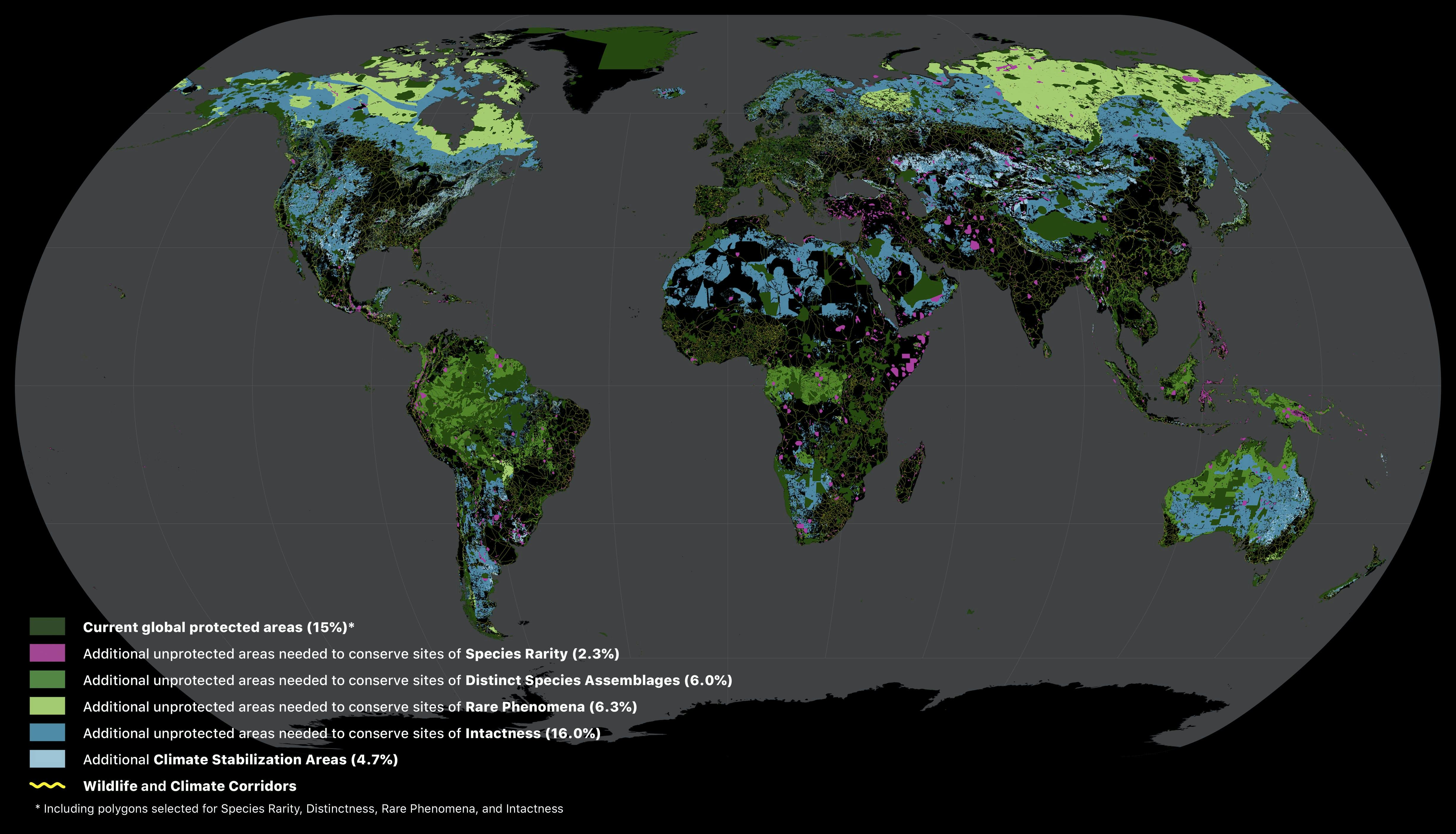
Motion 101 passes at IUCN, calls for protecting 50% of Earth’s lands and seas

Abstract: "In the final session of the World Conservation Congress of the International Union for Conservation of Nature (IUCN) on 10 September 2021, an overwhelming majority of delegates approved Motion 101, which calls for the protection of half of Earth’s lands and seas with a minimum of 30% by 2030, recognizing the important role of Indigenous peoples and local communities in preserving nature and the need for measures to respect and honor their rights and interests"

Read More: https://www.oneearth.org/motion-101-passes-at-iucn-calls-for-protecting-50-of-earths-lands-and-seas/