24 July 2018

Southeast Asian deforestation more extensive than thought, study finds

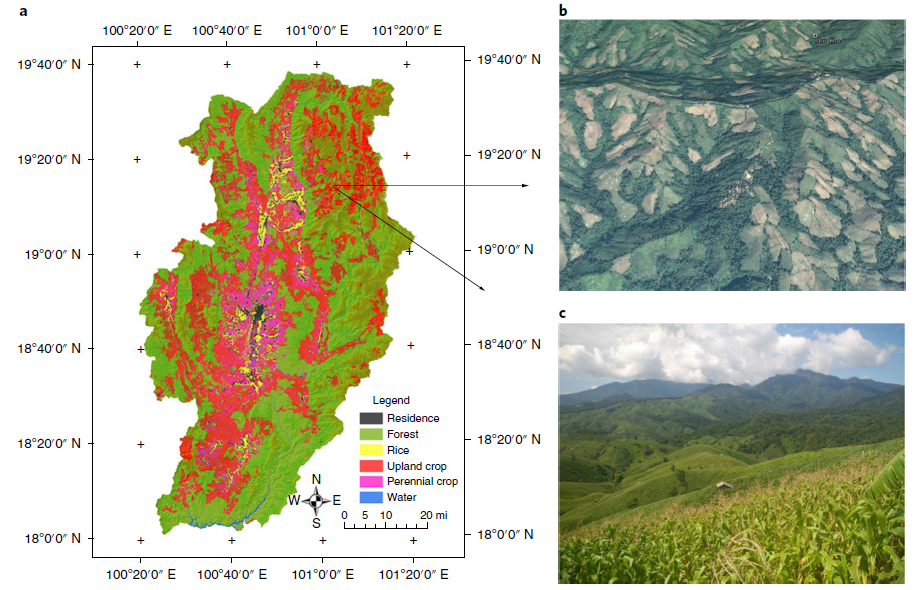
Cropland expansion along topographical frontiers in the 21st century in Nan, Thailand, a hilly and mountainous province located in the north of the country. a, The RapidEye (5 m resolution) satellite land-cover maps in 2017, showing areas of settlements, forest, rice, other crops, and water. The data were produced by the Geo-Informatics and Space Technology Development Agency (GISTDA), obtained from KASIKORN Foundation in Thailand. b, An aerial view of formerly forested land converted to croplands in the highlands, obtained from Google Earth (CNES/Airbus, image date: 2 February 2014). c, Photograph of general area of b from August 2016.

Abstract: "Researchers analyzed a suite of satellite imagery products and found much greater deforestation than expected since 2000 in the highlands of Southeast Asia. Much of the 82,000 square kilometers (31,700 square miles) they estimate to have been developed into croplands in the region’s highlands reflects previously undocumented conversion of forest, including primary and protected forests, to agriculture. Through a sample-based verification process, the authors found that 93 percent of the pixels from areas allocated to areas of net forest loss by the authors’ model were confirmed as net forest loss, and 99 percent of the pixels delineated as other areas were accurately labelled as non-net forest loss. The findings contrast with previous assumptions about land-cover trends currently used in projections of global climate change and future environmental conditions in Southeast Asia."


Read More: https://news.mongabay.com/wildtech/2018/07/southeast-asian-deforestation-more-extensive-than-thought-study-finds/


Study finds elephants plant trees, play big role in forest structure

Related image

Abstract: "Many large animals – collectively called “megafauna” – eat the fruit of Platymitra macrocarpa trees, including Asian elephants (Elephas maximus), sambar deer (Rusa unicolor), bears and gibbons. When researchers examined the fruit consumption, seed dispersal, and seed germination trends of P macrocarpa, they discovered that elephants were responsible for the lion’s share of successful seedling germination – 37 percent – despite consuming only 3 percent of available fruit. They also noticed a decline in P macrocarpa, which they say may be due to extirpated rhinos or reductions in local elephant populations. They say their results highlight the important role large herbivores play in forest structure, and that losses of these animals might significantly change tree composition and even a forest’s ability to store carbon."


Read More: https://news.mongabay.com/2018/07/study-finds-elephants-plant-trees-play-big-role-in-forest-structure/


One-third of global fisheries operating at biologically unsustainable levels

Abstract: "About 3.2 billion people around the world currently rely on fish for nearly 20 percent of their animal protein. That means that humans eat more than 150 million metric tons of fish every year — and as the global population increases by a couple billion over the next few decades, that number will surely rise. The fishing industry is eager to capitalize on this growth and boost profits, of course, but overfishing is already threatening the global supply of fish and there are plenty of reasons to be skeptical that this growth can and will be achieved sustainably. According to the Food and Agriculture Organization (FAO) of the United Nations’ latest report on the state of the world’s fisheries and aquaculture, however, that doesn’t mean we’re approaching “peak fish” — though it will require that fisheries management be strengthened and loss and waste reduced, while problems like climate change, illegal fishing, and pollution must also be dealt with."


Read More: https://news.mongabay.com/2018/07/one-third-of-global-fisheries-operating-at-biologically-unsustainable-levels/


08 July 2018

Biological responses to the press and pulse of climate trends and extreme events

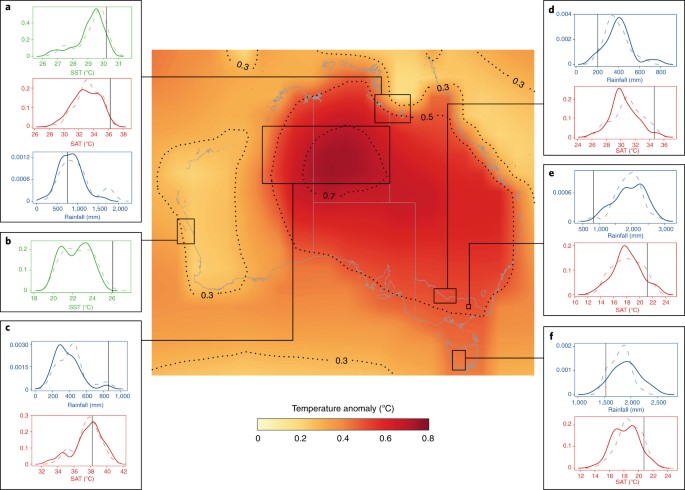
Figure 2


Abstract: "The interaction of gradual climate trends and extreme weather events since the turn of the century has triggered complex and, in some cases, catastrophic ecological responses around the world. We illustrate this using Australian examples within a press–pulse framework. Despite the Australian biota being adapted to high natural climate variability, recent combinations of climatic presses and pulses have led to population collapses, loss of relictual communities and shifts into novel ecosystems. These changes have been sudden and unpredictable, and may represent permanent transitions to new ecosystem states without adaptive management interventions. The press–pulse framework helps illuminate biological responses to climate change, grounds debate about suitable management interventions and highlights possible consequences of (non-) intervention."

Read More: https://www.nature.com/articles/s41558-018-0187-9


Hybrid white-rhino embryos created in last-ditch effort to stop extinction

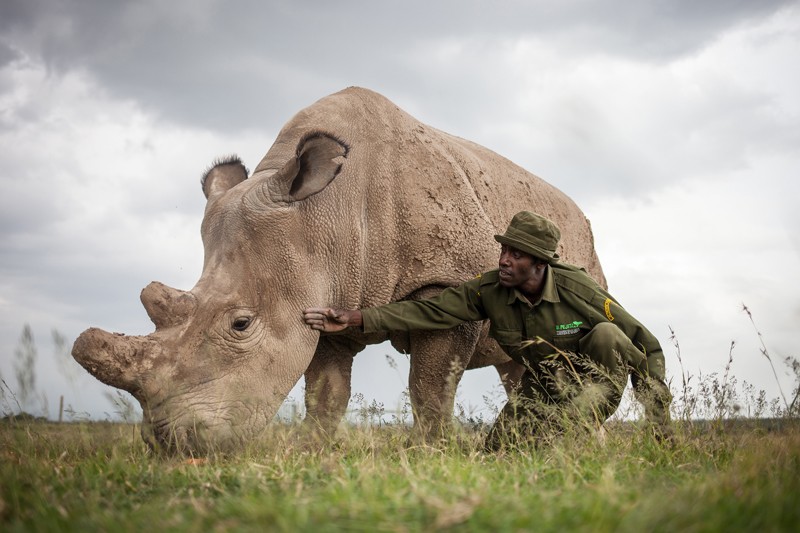
Northern white rhino and caretaker

Abstract: "Researchers have created hybrid rhino embryos as part of a 'Hail-Mary' attempt to rescue the northern white rhinoceros from all but certain extinction. The embryos — which have now been frozen — contain DNA from northern white rhinos (Ceratotherium simum cottoni) and a close relative subspecies and could be implanted into surrogates to yield animals that are a mix of both. The work is reported in a Nature Communications paper published on 4 July. The research “is an impressive step forward for the whole field”, says stem-cell biologist Jeanne Loring, at the Scripps Research Institute in La Jolla, California. Her team hopes to use stem-cell technology to repopulate the rhinos."


Read More: https://www.nature.com/articles/d41586-018-05636-6


18 June 2018

Bold nature retention targets are essential for the global environment agenda

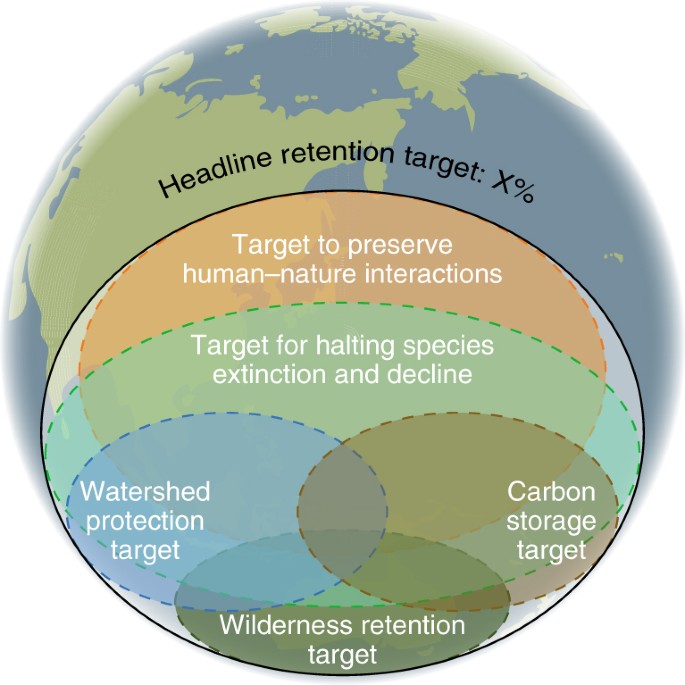
Figure 1


Ambitious targets for the retention — not just formal protection — of nature are urgently needed to conserve biodiversity and to maintain crucial ecosystem services for humanity.


Read More: https://www.nature.com/articles/s41559-018-0595-2

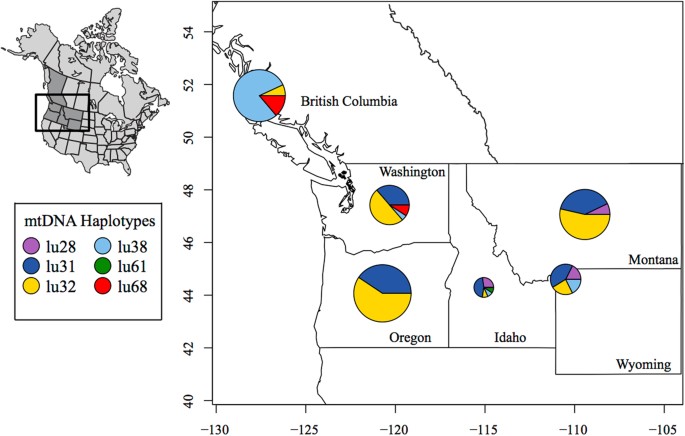
Natural re-colonization and admixture of wolves (Canis lupus) in the US Pacific Northwest: challenges for the protection and management of rare and endangered taxa

Figure 1


Abstract: "Admixture resulting from natural dispersal processes can potentially generate novel phenotypic variation that may facilitate persistence in changing environments or result in the loss of population-specific adaptations. Yet, under the US Endangered Species Act, policy is limited for management of individuals whose ancestry includes a protected taxon; therefore, they are generally not protected under the Act. This issue is exemplified by the recently re-established grey wolves of the Pacific Northwest states of Washington and Oregon, USA. This population was likely founded by two phenotypically and genetically distinct wolf ecotypes: Northern Rocky Mountain (NRM) forest and coastal rainforest. The latter is considered potentially threatened in southeast Alaska and thus the source of migrants may affect plans for their protection. To assess the genetic source of the re-established population, we sequenced a ~ 300 bp portion of the mitochondrial control region and ~ 5 Mbp of the nuclear genome. Genetic analysis revealed that the Washington wolves share ancestry with both wolf ecotypes, whereas the Oregon population shares ancestry with NRM forest wolves only. Using ecological niche modelling, we found that the Pacific Northwest states contain environments suitable for each ecotype, with wolf packs established in both environmental types. Continued migration from coastal rainforest and NRM forest source populations may increase the genetic diversity of the Pacific Northwest population. However, this admixed population challenges traditional management regimes given that admixture occurs between an adaptively distinct ecotype and a more abundant reintroduced interior form. Our results emphasize the need for a more precise US policy to address the general problem of admixture in the management of endangered species, subspecies, and distinct population segments."


Read More: https://www.nature.com/articles/s41437-018-0094-x