17 September 2022

Zero-deforestation commitments ‘fundamentally limited’ in tackling deforestation, study argues

Abstract: "Researchers found that while 90-99% of tropical deforestation in 2011-2015 was driven by agricultural industries, only 45-65% of the cleared land was actually used to grow crops or raise cattle. The rest of the cleared land was the result of activities such as speculative clearing and out-of-control agricultural fires, the study says. The researchers also concluded that because three-quarters of tropical deforestation is driven by domestic demand, corporate zero-deforestation pledges geared toward expert markets are limited in their ability to reduce this forest loss."

Read More: https://news.mongabay.com/2022/09/zero-deforestation-commitments-fundamentally-limited-in-tackling-deforestation-study-argues/

‘Mind-blowing’ marine heat waves put Mediterranean ecosystems at grave risk

Mediterranean coast.

Abstract: "A recent study reveals the widespread effects of climate change-driven marine heat waves on the ecological communities of the Mediterranean Sea. Rises in sea surface temperatures as high as 5° Celsius (9° Fahrenheit) above normal have caused die-offs in 50 different taxonomic groups of animals from around the Mediterranean Basin. These far-reaching impacts of the warming sea could devastate the fisheries on which many of the Mediterranean region’s 400 million people rely. Researchers advocate bolstering and expanding marine protected areas. Although they can’t hold back the warmer waters that have proven deadly to the sea’s rich biodiversity, these sanctuaries can help ensure that these species don’t have to cope simultaneously with other pressures, such as overfishing or pollution."

Read More: https://news.mongabay.com/2022/09/mind-blowing-marine-heat-waves-put-mediterranean-ecosystems-at-grave-risk/

Future reefs: A manifesto to save the world’s coral gardens

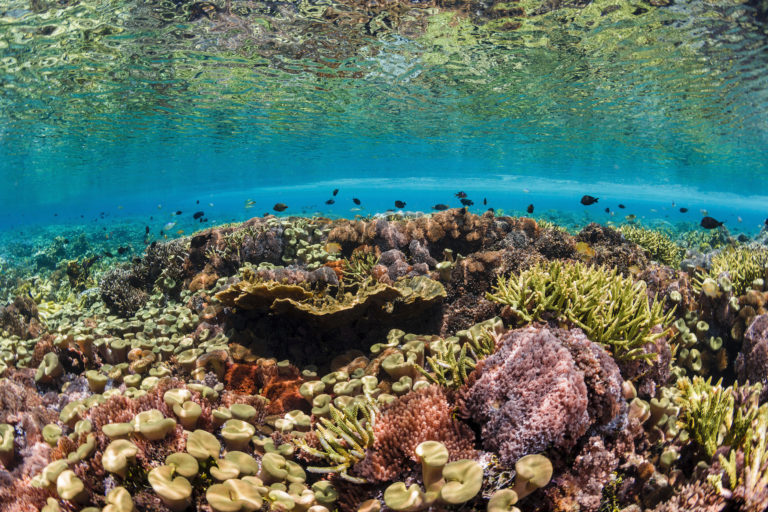
Coral reef in Indonesia

Abstract: "Coral reefs cover less than 3% of the ocean but contain a quarter of all marine life. Next to tropical rainforests, they are the most biodiverse ecosystems on Earth. Fifty of the world’s leading scientists recently laid out a roadmap to save the world’s coral reefs. With urgent climate action and by following this roadmap, these oases of beauty may retain critical marine biodiversity and provide a lifeline for coastal communities into the next century and beyond, a new op-ed argues."

Read More: https://news.mongabay.com/2022/09/future-reefs-a-manifesto-to-save-the-worlds-coral-gardens-commentary/

A Climate Risk Index for Marine Life

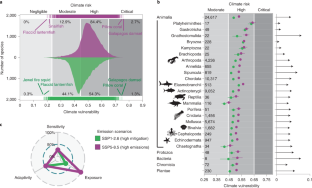
extended data figure 2


Abstract: "Climate change is impacting virtually all marine life. Adaptation strategies will require a robust understanding of the risks to species and ecosystems and how those propagate to human societies. We develop a unified and spatially explicit index to comprehensively evaluate the climate risks to marine life. Under high emissions (SSP5-8.5), almost 90% of ~25,000 species are at high or critical risk, with species at risk across 85% of their native distributions. One tenth of the ocean contains ecosystems where the aggregated climate risk, endemism and extinction threat of their constituent species are high. Climate change poses the greatest risk for exploited species in low-income countries with a high dependence on fisheries. Mitigating emissions (SSP1-2.6) reduces the risk for virtually all species (98.2%), enhances ecosystem stability and disproportionately benefits food-insecure populations in low-income countries. Our climate risk assessment can help prioritize vulnerable species and ecosystems for climate-adapted marine conservation and fisheries management efforts."

Read More: https://www.nature.com/articles/s41558-022-01437-y

07 July 2022

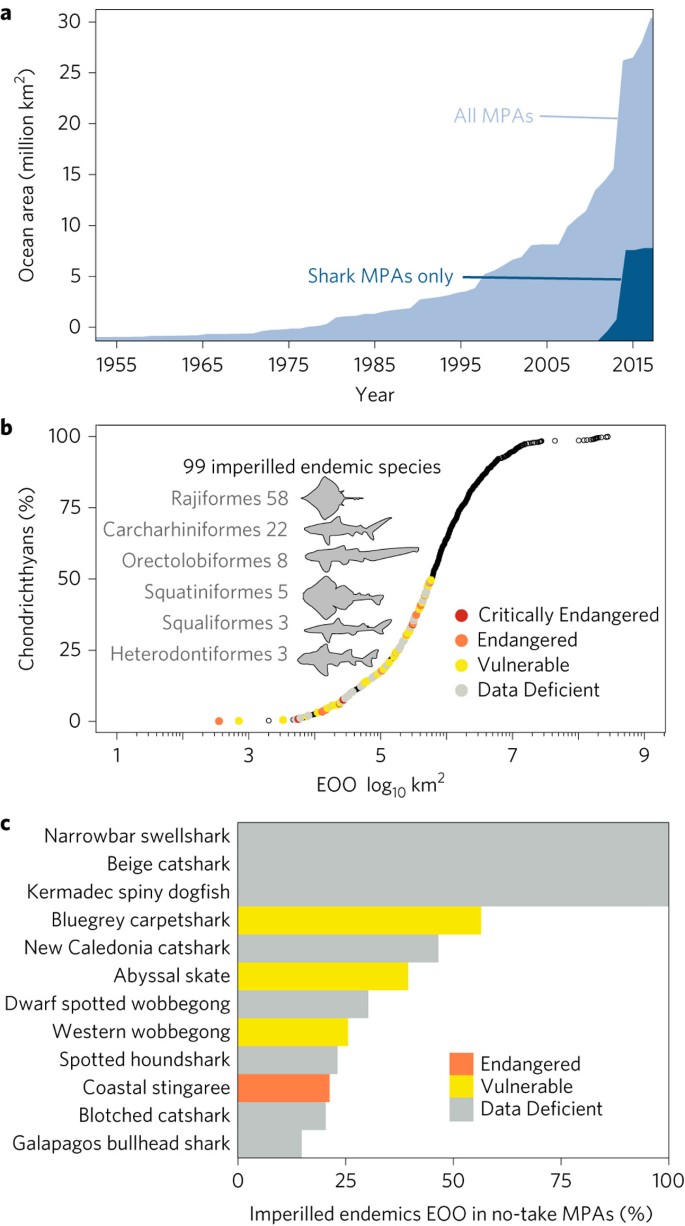
Global marine protected areas to prevent extinctions

figure 1


Abstract: "One goal of global marine protected areas (MPAs) is to ensure they represent a breadth of taxonomic biodiversity. Ensuring representation of species in MPAs, however, would require protecting vast areas of the global oceans and does not explicitly prioritize species of conservation concern. When threatened species are considered, a recent study found that only a small fraction of their geographic ranges are within the global MPA network. Which global marine areas, and what conservation actions beyond MPAs could be prioritized to prevent marine extinctions (Convention on Biological Diversity Aichi Target 12), remains unknown. Here, we use systematic conservation planning approaches to prioritize conservation actions for sharks, rays and chimaeras (class Chondrichthyes). We use chondrichthyans as they have the highest proportion of threatened species of any marine class. We find that expanding the MPA network by 3% in 70 nations would cover half of the geographic range of 99 imperilled endemic chondrichthyans. Our hotspot analysis reveals that just 12 nations harbour more than half (53) of the imperilled endemics. Four of these hotspot nations are within the top ten chondrichthyan fishing nations in the world, but are yet to implement basic chondrichthyan fisheries management. Given their geopolitical realities, conservation action for some countries will require relief and reorganization to enable sustainable fisheries and species protection."


Read More: https://www.nature.com/articles/s41559-016-0040

Identifying species threat hotspots from global supply chains

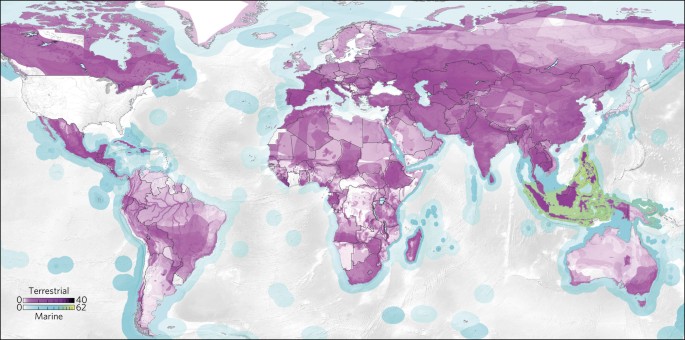
figure 1


Abstract: "Identifying hotspots of species threat has been a successful approach for setting conservation priorities. One important challenge in conservation is that, in many hotspots, export industries continue to drive overexploitation. Conservation measures must consider not just the point of impact, but also the consumer demand that ultimately drives resource use. To understand which species threat hotspots are driven by which consumers, we have developed a new approach to link a set of biodiversity footprint accounts to the hotspots of threatened species on the IUCN Red List of Threatened Species. The result is a map connecting consumption to spatially explicit hotspots driven by production on a global scale. Locating biodiversity threat hotspots driven by consumption of goods and services can help to connect conservationists, consumers, companies and governments in order to better target conservation actions."

Read More: https://www.nature.com/articles/s41559-016-0023

Towards climate-smart, three-dimensional protected areas for biodiversity conservation in the high seas

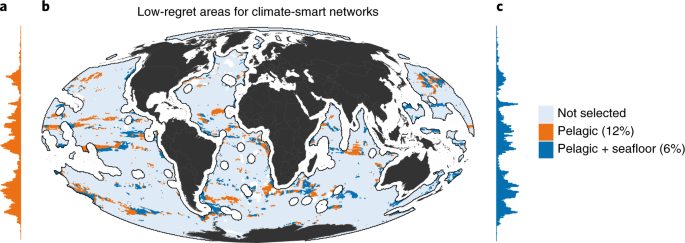
figure 3


Abstract: "Marine species are moving rapidly in response to warming, often in different directions and with variations dependent on location and depth. Given the current impetus to increase the area of protected ocean to 30%, conservation planning must include the 64% of the ocean beyond national jurisdictions, which in turn requires associated design challenges for conventional conservation to be addressed. Here we present a planning approach for the high seas that conserves biodiversity, minimizes exposure to climate change, retains species within reserve boundaries and reduces conflict with fishing. This is developed using data from across four depth domains, considering 12,932 vertebrate, invertebrate and algal species and three climate scenarios. The resultant climate-smart conservation areas cover 6% of the high seas and represent a low-regret option that provides a nucleus for developing a full network of high-seas marine reserves."

Read More: https://www.nature.com/articles/s41558-022-01323-7