27 August 2021

Grizzly bear DNA maps onto Indigenous language families

Abstract: "The bears and Indigenous humans of coastal British Columbia have more in common than meets the eye. The two have lived side by side for millennia in this densely forested region on the west coast of Canada. But it’s the DNA that really stands out: A new analysis has found that the grizzlies here form three distinct genetic groups, and these groups align closely with the region’s three Indigenous language families."

Read More: https://www.sciencemag.org/news/2021/08/mind-blowing-grizzly-bear-dna-maps-indigenous-language-families

Climate change threatens to squeeze out Indonesia’s medicinal plants

Abstract: "More than half of medicinal plant species in Indonesia won’t be able to grow in most of their current range by 2050 due to climate change, a new study says. Researchers say medicinal plant species on the islands of New Guinea, Java and Sulawesi will see the largest reduction in distribution area, in part due to sea level rise in these regions. The economic value of medicinal plants in Indonesia, coupled with other threats and a lack of resources for their conservation, makes it urgent that active conservation programs be put in place, the researchers say. Medicinal plants are valuable species not only for personal health but also for their economic value as they are traded by local and Indigenous communities."

Read More: https://news.mongabay.com/2021/08/climate-change-threatens-to-squeeze-out-indonesias-medicinal-plants/

Biogeography of acoustic biodiversity of NW Mediterranean coralligenous reefs

figure1

Abstract: "Monitoring the biodiversity of key habitats and understanding the drivers across spatial scales is essential for preserving ecosystem functions and associated services. Coralligenous reefs are threatened marine biodiversity hotspots that are challenging to monitor. As fish sounds reflect biodiversity in other habitats, we unveiled the biogeography of coralligenous reef sounds across the north-western Mediterranean using data from 27 sites covering 2000 km and 3 regions over a 3-year period. We assessed how acoustic biodiversity is related to habitat parameters and environmental status. We identified 28 putative fish sound types, which is up to four times as many as recorded in other Mediterranean habitats. 40% of these sounds are not found in other coastal habitats, thus strongly related to coralligenous reefs. Acoustic diversity differed between geographical regions. Ubiquitous sound types were identified, including sounds from top-predator species and others that were more specifically related to the presence of ecosystem engineers (red coral, gorgonians), which are key players in maintaining habitat function. The main determinants of acoustic community composition were depth and percentage coverage of coralligenous outcrops, suggesting that fish-related acoustic communities exhibit bathymetric stratification and are related to benthic reef assemblages. Multivariate analysis also revealed that acoustic communities can reflect different environmental states. This study presents the first large-scale map of acoustic fish biodiversity providing insights into the ichthyofauna that is otherwise difficult to assess because of reduced diving times. It also highlights the potential of passive acoustics in providing new aspects of the correlates of biogeographical patterns of this emblematic habitat relevant for monitoring and conservation."

Read More: https://www.nature.com/articles/s41598-021-96378-5

A meta-analysis reveals edge effects within marine protected areas

figure2

Abstract: "Marine protected areas (MPAs) play a leading role in conserving and restoring marine environments. MPAs can benefit both marine populations within their boundaries and external populations owing to a net export of organisms (spillover). However, little is known about variation in performance within MPAs. For example, edge effects may degrade populations within MPAs close to their boundaries. Here we synthesize empirical estimates of 72 taxa of fish and invertebrates to explore spatial patterns across the borders of 27 no-take MPAs. We show that there is a prominent and consistent edge effect that extends approximately 1 km within the MPA, in which population sizes on the border are 60% smaller than those in the core area. Our analysis of cross-boundary population trends suggests that, globally, the smallest 64% of no-take MPAs (those of less than 10 km2 in area) may hold only about half (45–56%) of the population size that is implied by their area. MPAs with buffer zones did not display edge effects, suggesting that extending no-take areas beyond the target habitats and managing fishing activities around MPA borders are critical for boosting MPA performance."

Read More: https://www.nature.com/articles/s41559-021-01502-3

A global-scale expert assessment of drivers and risks associated with pollinator decline

extended data figure 4

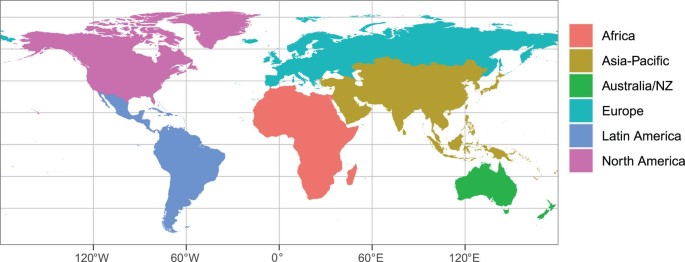
Abstract: "Pollinator decline has attracted global attention and substantial efforts are underway to respond through national pollinator strategies and action plans. These policy responses require clarity on what is driving pollinator decline and what risks it generates for society in different parts of the world. Using a formal expert elicitation process, we evaluated the relative regional and global importance of eight drivers of pollinator decline and ten consequent risks to human well-being. Our results indicate that global policy responses should focus on reducing pressure from changes in land cover and configuration, land management and pesticides, as these were considered very important drivers in most regions. We quantify how the importance of drivers and risks from pollinator decline, differ among regions. For example, losing access to managed pollinators was considered a serious risk only for people in North America, whereas yield instability in pollinator-dependent crops was classed as a serious or high risk in four regions but only a moderate risk in Europe and North America. Overall, perceived risks were substantially higher in the Global South. Despite extensive research on pollinator decline, our analysis reveals considerable scientific uncertainty about what this means for human society."

Read More: https://www.nature.com/articles/s41559-021-01534-9

11 January 2020

Forest loss moves swiftly once 50% deforestation ‘tipping point’ reached

A mosaic landscape in Colombia. Image by Rhett A. Butler/Mongabay.


Abstract: "Scientists looked at satellite images showing land use change between 1992 and 2015. Their analysis and modeling reveals that deforestation occurs relatively slowly at first, until a block has lost around 50% of its forest. After that “tipping point,” the transition to a wholly different type of landscape is much more rapid. The findings support conservation strategies aimed at protecting intact areas that still have the bulk of their forest standing."


Read More: https://news.mongabay.com/2020/01/forest-loss-deforestation-tipping-point-50/? fbclid=IwAR3SNV6jl7lYBVeoYvsJMGw3wptDck6XpzIAlHST5bmYu9nNgG7ZdeUW-P0

12 November 2019

Insect decline more extensive than suspected

Insect decline more extensive than suspected


Abstract: "Compared to a decade ago, today the number of insect species in many areas has decreased by about one-third. This is the result of a survey of an international research team led by scientists from the Technical University of Munich (TUM). The loss of species mainly affects grasslands in the vicinity of intensively farmed land—but also applies to forests and protected areas...Since 2008, they have measured a decrease of approximately 40 percent of insect biomass in the forests they studied. In grasslands, the results were even more alarming: At the end of the study period, the insect biomass decreased to only one-third of its former level."


Read More: https://m.phys.org/news/2019-10-insect-decline-extensive.html? fbclid=IwAR3qno4uh0RVcBBbMH8ZURDKXKAuoA6tvXxekfgIrUPMr7ToCQcv3c8mgcg