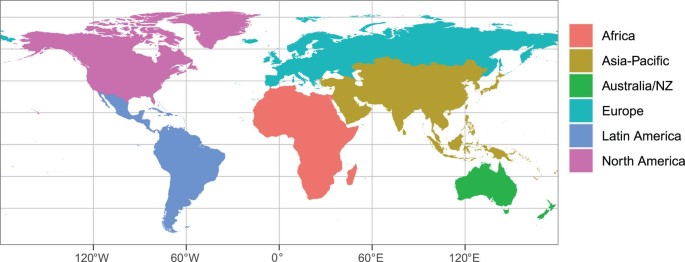
Abstract: "Pollinator decline has attracted global attention and substantial
efforts are underway to respond through national pollinator strategies
and action plans. These policy responses require clarity on what is
driving pollinator decline and what risks it generates for society in
different parts of the world. Using a formal expert elicitation process,
we evaluated the relative regional and global importance of eight
drivers of pollinator decline and ten consequent risks to human
well-being. Our results indicate that global policy responses should
focus on reducing pressure from changes in land cover and configuration,
land management and pesticides, as these were considered very important
drivers in most regions. We quantify how the importance of drivers and
risks from pollinator decline, differ among regions. For example, losing
access to managed pollinators was considered a serious risk only for
people in North America, whereas yield instability in
pollinator-dependent crops was classed as a serious or high risk in four
regions but only a moderate risk in Europe and North America. Overall,
perceived risks were substantially higher in the Global South. Despite
extensive research on pollinator decline, our analysis reveals
considerable scientific uncertainty about what this means for human
society."
Read More: https://www.nature.com/articles/s41559-021-01534-9


